
How to Write a Strong Thesis Statement (With Examples)

A strong thesis statement is the absolute foundation of a successful academic paper. It is a concise summary of the specific argument you intend to prove. Without a sharp thesis, your examiner can be confused about your primary objective.
At The Page Doctor, we specialise in helping students transform vague ideas into rigorous academic arguments. Whether you are tackling an undergraduate essay or a complex postgraduate dissertation, mastering the thesis statement is the single most effective way to improve your grades. This guide provides a comprehensive breakdown of how to construct, refine, and position a thesis that commands attention.
Why the Thesis Statement is the Anchor of Your Paper
In academic writing, the Golden Thread refers to the continuous line of logic that runs from your introduction to your conclusion. The thesis statement is the knot that holds that thread in place. It serves as a roadmap for the reader, signaling exactly what you will argue and which specific areas of evidence you will explore.
A well-crafted thesis performs several vital functions:
It Establishes Boundaries: Academic topics like "The Impact of Social Media" are far too broad for a standard essay. A thesis narrows this down to a manageable focus, such as "The impact of Instagram’s algorithmic changes on the body image of UK teenagers."
It Provides a Preview: By mentioning your main points of evidence within the thesis, you prepare the reader for the structure of the body paragraphs.
It Demonstrates Criticality: A thesis must be "arguable." If your statement is an undeniable fact (e.g., "The sun is hot"), there is no room for analysis. A strong thesis takes a stand on a controversial or complex issue, showing your tutor that you are engaging with the material at a high level.
The Secret Formula: Subject + Stance + Reasons
If you find yourself staring at a blank screen, stop trying to write "the perfect sentence" and start by using a structural formula. You can polish the vocabulary later, but ensuring these three components are present is essential for clarity.
Subject (The specific topic) + Stance (Your unique argument or claim) + Reasons (The roadmap of your evidence) = A High-Distinction Thesis.
Let us look at how this formula transforms a basic idea into a professional academic claim:
The Subject: The implementation of Universal Basic Income (UBI) in the United Kingdom.
The Stance: It is a necessary solution to the rise of automation in the workforce.
The Reasons: Because it provides a safety net for displaced workers and stimulates local economic growth.
The Polished Result: "The implementation of a Universal Basic Income in the United Kingdom is a necessary response to the increasing automation of the manufacturing sector, as it provides a vital financial safety net for displaced workers while simultaneously stimulating growth within local economies."
Example Breakdown: Moving from Weak to Strong
Understanding the difference between a "descriptive" and an "analytical" thesis is the key to moving from a 2:2 to a First-Class mark. Descriptive writing tells the reader what happened; analytical writing explains why it matters and how different factors interact.
1. Education and Sociology
Weak: "This essay will look at the pros and cons of online learning in British primary schools."
The Problem: This is a statement of intent, not a thesis. It doesn't tell the reader what your conclusion is.
Strong: "While online learning offers flexibility, it ultimately exacerbates the attainment gap in British primary education because students from lower-socioeconomic backgrounds often lack the necessary digital infrastructure and parental support."
Why it works: It makes a clear, debatable claim (it exacerbates the attainment gap) and provides specific reasons that will be explored in the body of the essay.
2. Business and Management
Weak: "Marketing is very important for the success of small businesses in the UK."
The Problem: This is an observation that no one would disagree with. It offers no room for deep debate.
Strong: "Small businesses in the UK must prioritise ethical marketing over traditional aggressive sales tactics, as contemporary British consumers increasingly value corporate social responsibility (CSR) and brand transparency over price point."
Why it works: It sets up a comparison (ethical vs. traditional) and explains the "why" (consumer values), providing a clear direction for the research.
Where to Put Your Thesis Statement
In general academic tradition, the thesis statement is most effective when positioned at the conclusion of the introductory paragraph. This placement follows a logical "funnel" structure that guides the reader from a broad area of interest down to your specific contribution.
Standard academic practice suggests building the introduction through three key stages:
The Hook: A broad opening that introduces the general field of study or the overarching problem.
The Context: Several sentences providing the necessary background information, historical setting, or definitions of key terms.
The Thesis: The final sentence (or two) of the introduction that presents your specific, refined argument.
By placing the thesis at the end of the opening section, you ensure the reader has been equipped with all the context required to understand your argument before you move into the supporting evidence. It serves as a structural "bridge," creating a seamless transition into your first body paragraph and ensuring the reader knows exactly what to look for in the pages that follow.
Common Pitfalls to Avoid
Even experienced students can fall into "thesis traps" that weaken their overall paper. When self-editing your work, check for these three common issues:
The "Dictionary" Thesis: Avoid starting your thesis with “Oxford Dictionary defines [Topic] as...” This is considered a filler technique and lacks the academic sophistication required at the university level.
The "Vague" Thesis: Phrases like “many factors,” “various reasons,” or “different aspects” are red flags. If you have "various reasons," name the most important two or three directly in your thesis.
The "I Believe" Thesis: In UK academic writing, it is generally best to avoid the first person (“I think,” “I believe”). Instead of saying “I believe climate change is a problem,” simply say “Climate change is a critical problem.” This makes your argument sound more objective and authoritative.
Refining Your Argument: The "So What?" Test
Once you have written a draft of your thesis, ask yourself: “So what?”
If your thesis says, “The Roman Empire fell because of many reasons,” then your response would be: “We already knew that; why does your essay matter?”
However, if your thesis says, “The fall of the Western Roman Empire was primarily driven by hyperinflation and a reliance on mercenary forces, rather than purely external invasions,” then your response is: “Interesting, you are challenging the traditional narrative of 'barbarian' invasions. Show me the evidence.”
A strong thesis provokes interest and justifies the existence of the essay. If you cannot answer So what? question, you need to sharpen your stance.
Final Checklist for Your Thesis Statement
Before you submit your next assignment, run your thesis through this quick checklist:
Is it specific? Have you named the exact factors you will discuss?
Is it arguable? Could a reasonable person disagree with your claim?
Is it supported? Do you have enough evidence in your body paragraphs to back up this specific statement?
Is it at the end of the intro? Does it serve as a clear transition into your first point?
How The Page Doctor Supports Your Academic Journey
Crafting a compelling central argument is a high-stakes challenge because the strength of your thesis determines whether your work is viewed as a definitive analysis or an aimless summary. Success is specificity, not generalization. You already have the data, but our professional guides provide the essential roadmap to prune away "fluff" and replace it with a sharp, assertive claim that dictates the direction of your paper.
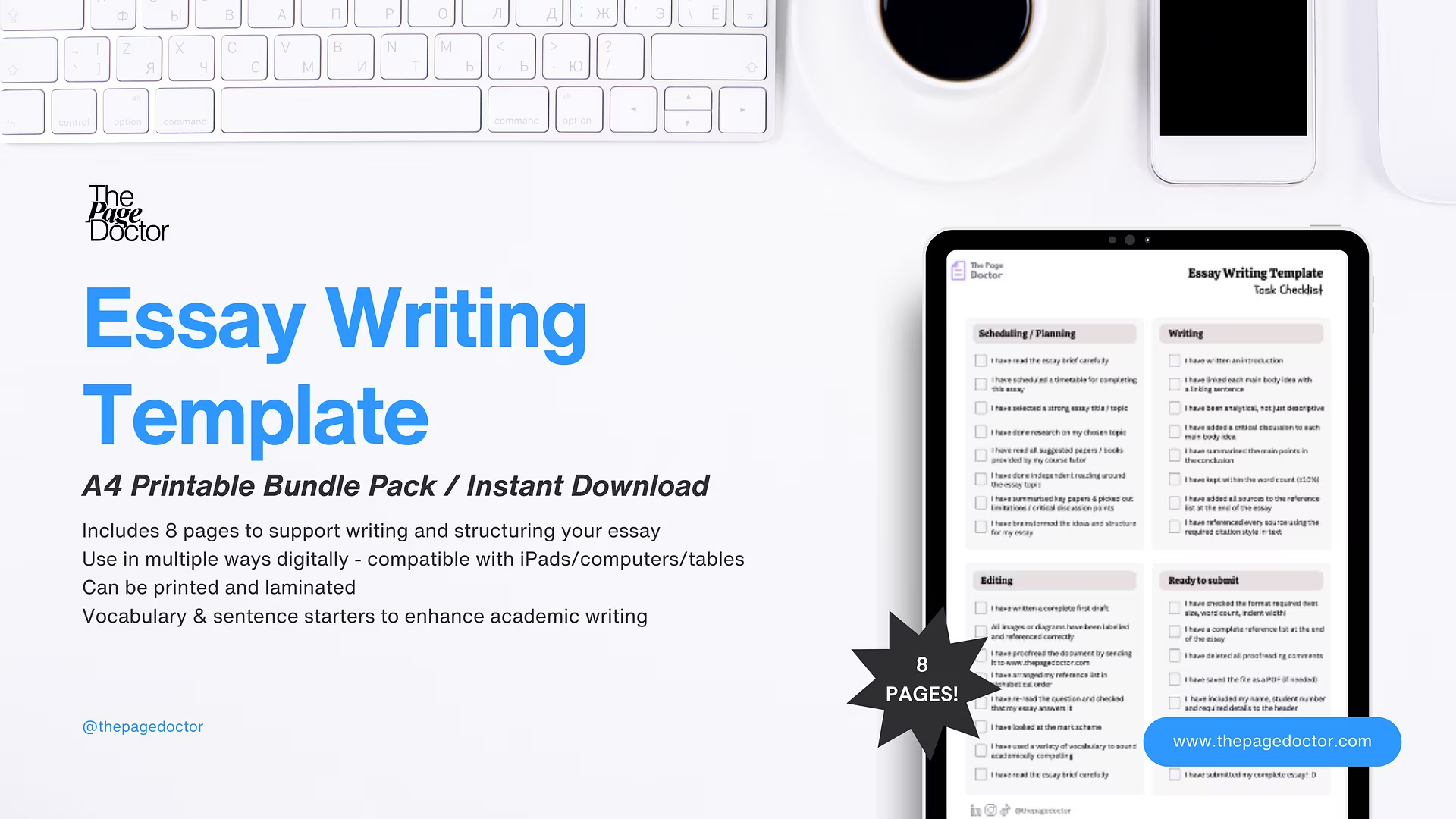
By using our curated resources, you can eliminate the guesswork of balancing complexity with clarity in your main premise. If you find yourself stuck at the planning stage, you can book a 1-on-1 consultation to help refine your lit review or narrow your focus with expert feedback. For those ready for a complete transformation, our 30-day thesis writing course offers a step-by-step roadmap to guide you from initial concept to a finished, professional draft. Our services ensure your argument isn't just present, but a polished, professional anchor that commands respect and moves your academic career forward with confidence.
Follow us for more updates!
At The Page Doctor, we help you overcome these hurdles through:
1-1 Consultation with Dr Amina: Work with Dr Amina to identify exactly where your writing is falling short. We provide the feedback your lecturers often don't have time to give.
Proofreading & Feedback Services: Our team is composed of qualified PhD researchers and post-doctorate researchers who will meticulously review and enhance various aspects of your documents to ensure its accuracy, clarity and adherence to academic conventions.
Free Resources: Check out our founder’s YouTube channel for tutorials on everything from dissertation planning to mastering Harvard and APA referencing.
Expert-designed templates: Guides to support you through all stages of your academic journey.
