
The Ultimate List of Transition Words for Better Flow

Signposting is the use of specific words and phrases to tell your reader exactly where your argument is going. Just as road signs tell a driver when to turn, slow down, or expect a junction, signposting in academic writing alerts the reader to a change in direction, a concluding thought, or the introduction of a new piece of evidence. Without these markers, even the most brilliant research can feel choppy and difficult to follow.
At The Page Doctor, we specialise in helping students transform vague ideas into rigorous academic arguments. By mastering signposting, you transform a series of disconnected sentences into a cohesive, persuasive narrative that is easy for a marker to navigate and grade. This guide provides a comprehensive breakdown of how to use transition words to create a paper that commands attention.
Category 1: Addition (Furthermore, Moreover, Additionally)
When you want to build upon a point or add a new layer to your argument, you need words of addition. Avoid simply starting every sentence with Also; it is repetitive and lacks the formal tone required for higher education.
Furthermore: Use this when you have a strong point and want to follow up with an even more persuasive piece of evidence.
Moreover: This is ideal for introducing a new aspect of the topic that reinforces your current stance.
Additionally: A reliable way to stack evidence without sounding redundant.
In addition to: This allows you to link the previous sentence directly into the start of the next one, creating a seamless bridge.
Tip:
Avoid stacking too many additional words in a single paragraph. If you have three supporting points, use a mix of transitions. Start with Additionally for your second point, but save Moreover or Furthermore for your strongest, final piece of evidence to give it more weight.
Example:
The Basic Version: The study found that screen time affects sleep. It also noted that blue light is a major factor.
The Page Doctor Version: The study found that excessive screen time significantly disrupts sleep patterns. Furthermore, it noted that the blue light emitted by devices suppresses melatonin production, further exacerbating the issue.
Category 2: Contrast (However, Conversely, On the other hand)
Academic writing is not just about agreeing with your own thesis; it is about acknowledging the complexity of the debate. To reach the highest grade boundaries, you must highlight where different theories or data sets disagree.
However: The gold standard of contrast. Use it to pivot from a common assumption to your specific critique.
Conversely: This is excellent for comparing two distinct schools of thought. If one theory suggests X, conversely, another suggests Y.
On the other hand: Best used when weighing up two equally valid but opposing viewpoints.
Nevertheless: This word is a powerhouse. It allows you to acknowledge a counter-argument but then immediately dismiss its impact on your overall thesis.
Using these words effectively proves that you are not just reading the material, but actively interrogating it.
Tip:
When using However to start a sentence, place a comma immediately after it. If you want to sound more sophisticated, try placing it in the middle of the sentence: The data, however, suggests a different outcome. This creates a more natural, rhythmic flow in your prose.
Example:
The Basic Version: Some researchers believe that remote work increases productivity. Others think it makes people less focused.
The Page Doctor Version: Some researchers argue that remote work increases productivity by eliminating commute times and reducing office distractions. Conversely, other scholars suggest that the lack of a structured environment leads to a decrease in overall focus and team collaboration.
Category 3: Cause and Effect (Therefore, Consequently, As a result)
Whether you are writing a scientific report or a history essay, you must show how one factor led to another. Without clear cause-and-effect transitions, your writing can feel like a series of coincidences rather than a logical progression.
Therefore: The most direct way to show that a conclusion has been reached based on the evidence provided.
Consequently: This highlights the direct result of an action or event, which is particularly useful in case studies.
As a result: A clear, punchy way to show the outcome of a specific variable.
Thus: A more formal, concise version of therefore that works beautifully at the end of a complex paragraph.
Tip:
Only use these words when there is a direct, proven link between two points. Using Therefore when the logic is weak is a common mistake that markers spot instantly. If the connection is tentative, use This suggests that instead.
Example:
The Basic Version: The government increased taxes on sugary drinks. People bought fewer sodas.
The Page Doctor Version: The government implemented a significant tax increase on sugar-sweetened beverages. Consequently, there was a measurable decline in soda consumption across lower-income demographics within the first year.
Category 4: Conclusion (In summary, Ultimately, Given these points)
The final hurdle is the conclusion. Many students fall into the trap of simply repeating their introduction. Transition words in your final section should signal that you are now synthesising everything discussed into a final, definitive stance.
In summary: A clear signal that you are wrapping up the smaller points.
Ultimately: This suggests that after all the evidence is weighed, this is the most important takeaway.
Given these points: This reminds the reader of the journey you have taken them on before you deliver the final verdict.
To conclude: The traditional way to signpost the final section of your paper.
Tip:
Reserve Ultimately for your very last mic drop moment. It is a powerful word that signals the absolute end of a debate. Using it too early in a paragraph can confuse the reader about where your argument actually peaks.
Example:
The Basic Version: The data shows that the project was a success. We should continue it.
The Page Doctor Version: While the project faced initial logistical hurdles, the final data confirms that all primary objectives were met. Ultimately, the evidence suggests that the initiative should be extended into the next financial year to ensure long-term sustainability.
How The Page Doctor Supports Your Academic Journey
Crafting a cohesive flow is a high-stakes challenge because the strength of your signposting determines whether your work is viewed as a definitive analysis or an aimless summary. Success is connectivity, not just raw data. You already have the research, but our professional guides provide the essential roadmap to prune away choppy sentences and replace them with a seamless narrative that dictates the direction of your paper.
By using our curated resources, you can eliminate the guesswork of balancing complex arguments with structural clarity. If you find yourself stuck at the drafting stage, you can book a 1-on-1 consultation to help refine your flow or polish your transitions with expert feedback.
Once you have finished the heavy lifting and completed your draft, do not leave your academic reputation to chance. Book our professional editing service; simply send it to us and we will refine it for you. Our team will meticulously check your paraphrasing accuracy, citation consistency, and logical flow to ensure your research is presented in the best possible light for your supervisors! Our services ensure your signposting isn't just present, but a polished, professional anchor that commands respect and moves your academic career forward with confidence.
Follow us for more updates!
At The Page Doctor, we help you overcome these hurdles through:
1-1 Consultation with Dr Amina: Work with Dr Amina to identify exactly where your writing is falling short. We provide the feedback your lecturers often don't have time to give.
Proofreading & Feedback Services: Our team is composed of qualified PhD researchers and post-doctorate researchers who will meticulously review and enhance various aspects of your documents to ensure its accuracy, clarity and adherence to academic conventions.
Free Resources: Check out our founder’s YouTube channel for tutorials on everything from dissertation planning to mastering Harvard and APA referencing.
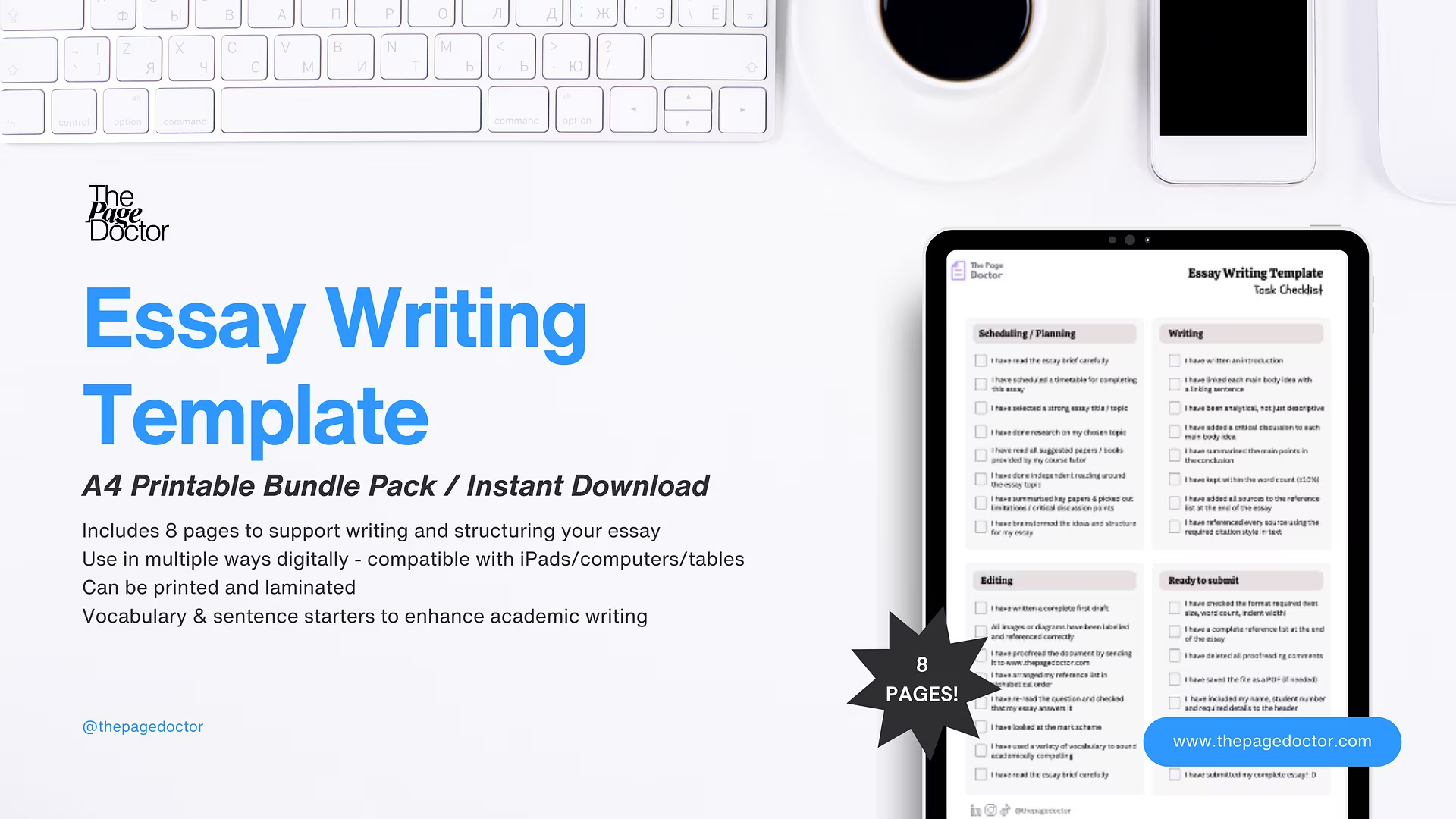
Expert-designed templates: Guides to support you through all stages of your academic journey.
